
PND & Mental Health — You’re Not Alone
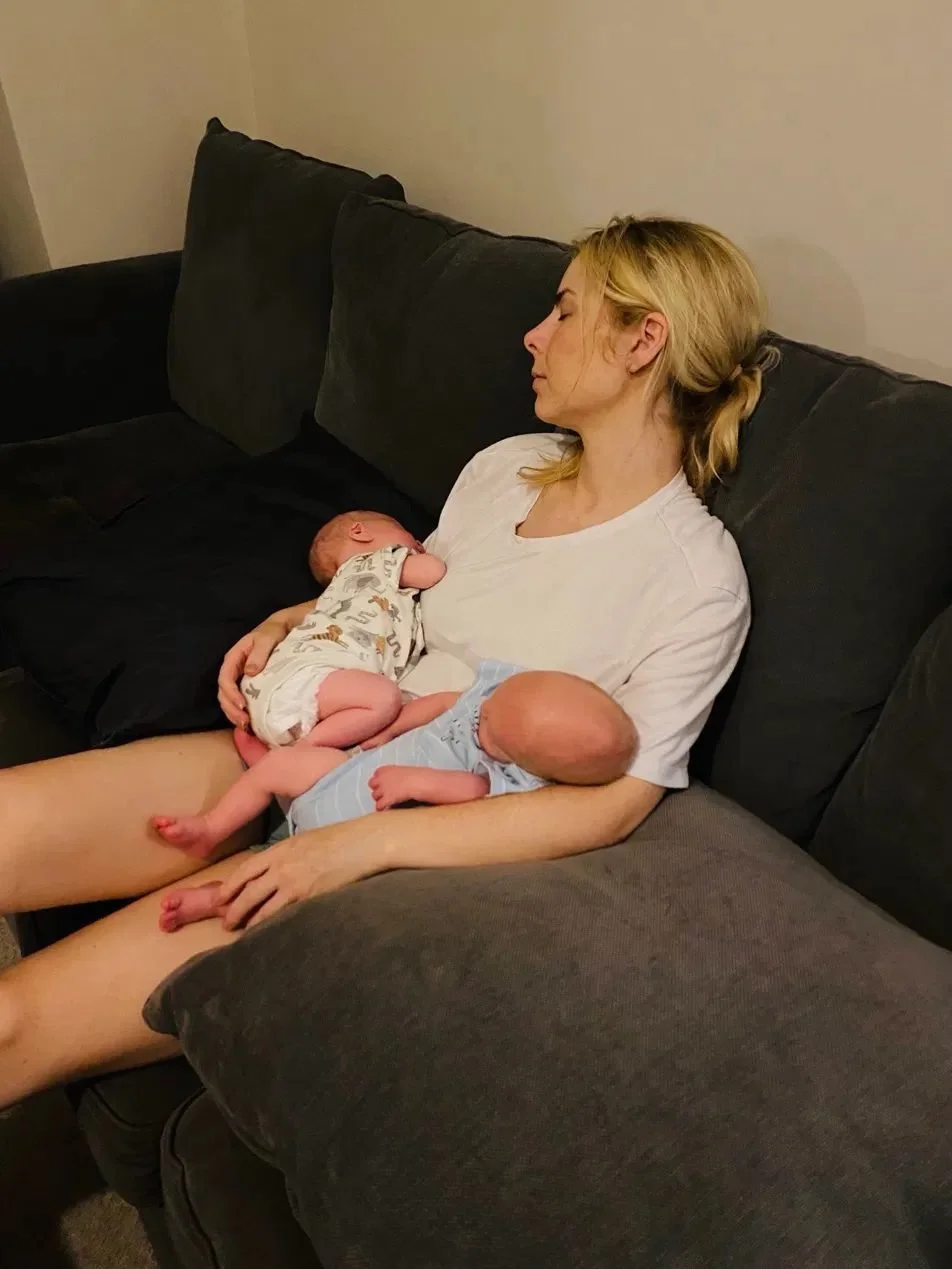
This page exists because I wish it had existed when I needed it. If you're struggling right now — please reach out to someone before you finish reading.
The short version
Postnatal depression is common, treatable, and has real hormonal and brain causes. It isn't weakness.
What helped me: being completely honest with my GP, and getting treatment.
It can get better. It did for me.
If you need help right now: if you feel you might harm yourself or can't keep yourself safe, call 999 or go to A&E. For urgent mental health help, call NHS 111 and choose the mental health option, call Samaritans free on 116 123, or text SHOUT to 85258. In Northern Ireland, call Lifeline on 0808 808 8000. This page is my personal experience, not medical advice. Please talk to your GP, midwife or health visitor about any treatment, including medication.
What Nobody Told Me
I didn't recognise my postnatal depression for what it was. Not at first.
I thought I was just exhausted. I thought any mum of premature twins in my situation would feel this way. I thought the darkness was situational — the broken marriage, the traumatic birth, the relentless feeding schedule. I thought if I just kept going it would lift on its own.
It didn't.
My PND was severe. I simply couldn't see the wood for the trees. There were nights so dark I didn't know how I was going to get through them. Nights where I genuinely didn't know if I would.
What PND Actually Feels Like
Not what the leaflets describe. What it actually feels like.
It feels like being underwater. Like everyone else is living normally above the surface and you are watching them through glass, unable to reach them.
It feels like loving your babies fiercely and completely — and still feeling nothing like joy.
It feels like shame. Like you should be grateful. Like admitting you are struggling means you are failing.
You are not failing. You are ill. And there is a difference.
Why Twin Mums Are At Higher Risk — The Neuroscience
Pregnancy physically changes your brain. During pregnancy, hormones like oestrogen rise to many times their usual level, then fall sharply after the birth. That hormonal cliff edge is staggering.
Researchers are now mapping how the brain changes in pregnancy and after birth, including in areas linked to emotion and stress. They’re still working out exactly how this connects to postnatal depression.
For twin mums — navigating all of this with two babies, often prematurely, often without the support you expected, research suggests the risk is higher than for mums of one baby.
It is a response to an extraordinary set of circumstances. And it is treatable.
What Helped Me
Medication. Specifically escitalopram.
I want to say that plainly because I think too many women exhaust themselves trying to cope without it, not realising that medication can be the thing that finally lifts the fog enough to function. It was for me.
I am not saying medication is right for everyone. I am saying it was right for me — and that I wish someone had told me earlier that asking for it was not defeat. It was the bravest thing I did.
Please talk to your GP honestly about how you are feeling. Tell them everything. Don't minimise. Don't perform wellness. Let them help you.
The Privilege I Carry — And Why It Matters
I had help that many women don’t: a family with the means and the love to support me, and a brother, a doctor, who took time off work to help me get back on my feet.
If PND was that hard with all that help, I can only imagine how it feels without it.
Every twin mum deserves support, not just the ones with family around them. That’s a big part of why TwinSprout exists.
If You Are Struggling Right Now
Please reach out. Not tomorrow. Now.
— Your GP or health visitor — always your first port of call. Be honest. Tell them everything.
— PANDAS Foundation — perinatal mental health support: WhatsApp support (Mon–Fri, 9am–5pm) or book a free call back at pandasfoundation.org.uk
— Samaritans — 116 123 — free, 24 hours, UK-wide, completely confidential
— Twins Trust Twinline — 0800 138 0509 — free helpline just for twin and triplet families (opening hours at twinstrust.org)
You do not have to carry this alone.
Getting help is the most important thing you can do — for them, and for you.
— Rebekah